Contents
The scanner makes a paper project feel as though it has already begun. I would begin a little earlier, with the folder still recognizably arranged and a place to record what it contains. A digital image can preserve visible information while losing the relationship between a letter, its envelope and the note tucked behind it. Before choosing settings or a naming pattern, I want a small inventory that keeps those relationships available and helps me choose a realistic first batch.
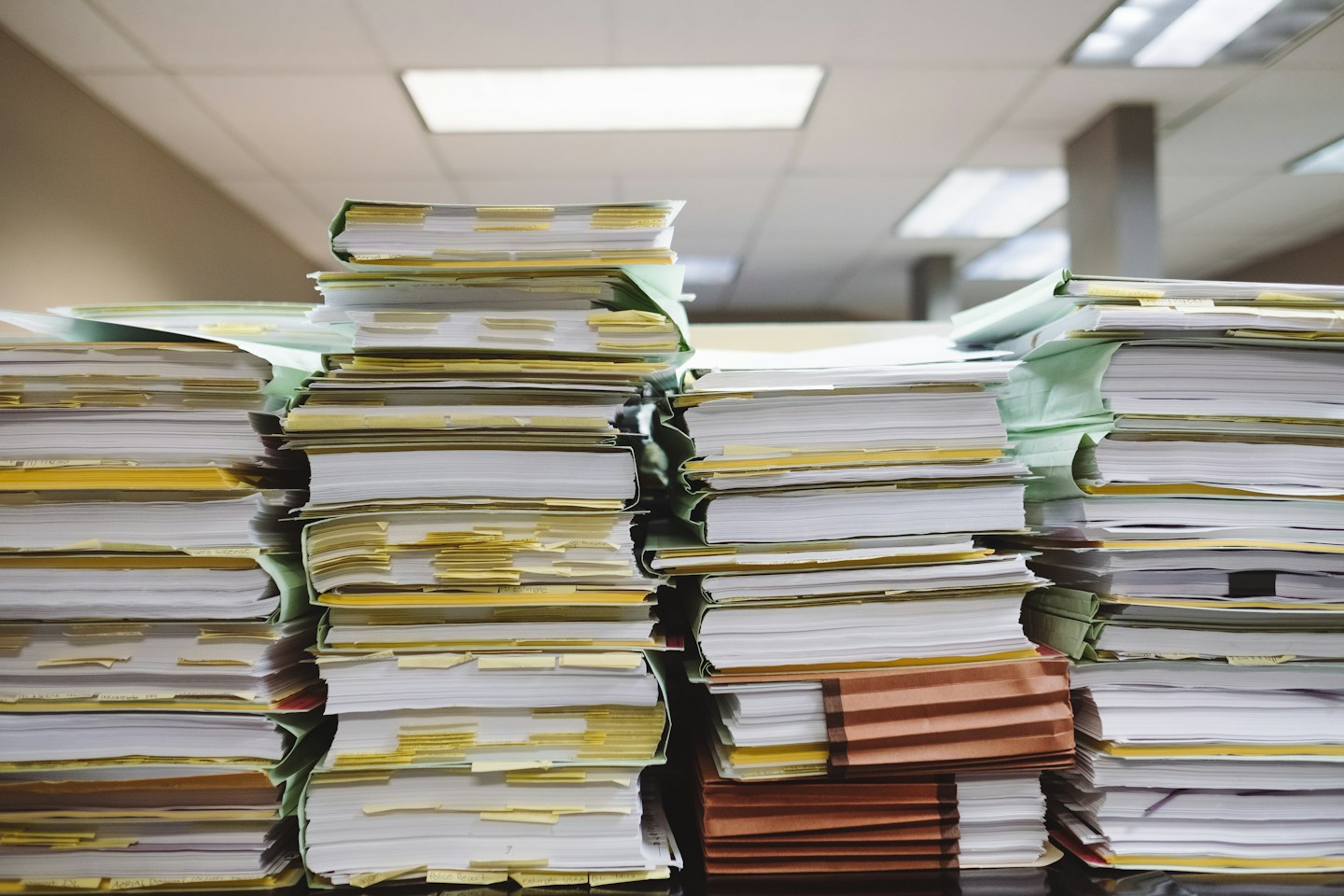
The example here is an imaginary inherited folder containing correspondence, event leaflets and a few handwritten notes. It does not represent my family or any actual collection. I will survey it, create a modest inventory and plan a first digital batch without treating an ordinary filing exercise as conservation treatment. The useful outcome is not a promise to digitize everything. It is a clearer account of what exists, what needs care and what the next person would need to understand the work.
Survey the container before rearranging its contents
I would first record the folder as received. Its label, broad contents and apparent grouping may help explain why the papers are together. A quick description can preserve that context before individual items move onto a table. If there are envelopes or smaller bundles, I would note their relationship rather than immediately sort everything by date. The existing arrangement may be accidental, meaningful or a mixture of both. I do not need to decide that instantly in order to avoid destroying the evidence of it.
For the constructed folder, I might describe three groups: correspondence in envelopes, printed event material and loose notes. These are broad working groups, not claims about who created them or why. A label such as personal letters should be based on inspecting enough material to justify it. If I do not know the sender, date or subject, the inventory can say unknown. A helpful survey begins with what is visible and identifiable, leaving interpretation separate from the first account of the objects.
I would choose a workspace that allows the material to remain supported and the session to end safely. The project should fit the available space, not require the papers to occupy a shared table indefinitely. Before handling unusual, damaged or fragile material, I would consult appropriate preservation guidance or specialist help. A scanner's availability does not make every object suitable for ordinary handling. The inventory can identify that a particular item needs assessment without obliging me to solve its condition during this session.
Preserve the relationships that carry meaning
A letter and envelope are an obvious pair, but the relationship can be subtler. A note clipped to an event leaflet may explain why it was kept. A sequence of pages may form one document even when no page numbers are present. I would record those associations before assigning each sheet an independent digital identity. A collection of perfectly named scans is less useful if the viewer cannot tell which sheets belong together or which original container gave them context.
In the demonstration, I would give a letter-and-envelope group one parent identifier and distinguish its components beneath it. The exact syntax is a local choice. Folder-01-item-03 can refer to the group, while descriptive component labels identify the letter's front, reverse and envelope. I would not claim that such a pattern is an archival standard. Its job is practical continuity: the physical grouping, inventory row and digital files should remain connectable without depending entirely on the organizer's memory.
If the order is unclear, I would not manufacture a neat sequence. A note can say that three loose pages appear related but their order is not established. A temporary grouping can preserve the possibility for later inspection. Inventing page numbers or dates simply to fill a table would make the digital arrangement look more certain than the material permits. I would prefer an unresolved relationship that another reader can investigate to an elegant false arrangement that obscures the question before they see it.
Choose an inventory scale the folder can support
The Library of Congress's personal digital inventory resource begins with identifying what material exists and where it is located, then considering what to preserve. I would apply that broad principle to the transition from this physical folder to a digital collection. The first inventory does not need a full transcription of every page. A group-level description may be sufficient until I choose a particular item for closer work. The level of detail should serve the next decision rather than anticipate every possible future use.
My initial fields would be identifier, brief description, original location, estimated extent, known date information, handling concern and next action. Estimated extent might say one letter with an envelope rather than pretend a quick glance established the number of written pages. Date information should distinguish a visible date from an estimate based on surrounding material. A note's purpose is to retain these distinctions. It does not become more accurate merely because every column has a precise-looking value.
I would keep administrative information appropriately private. An inherited folder may contain details about living people or material whose sharing rights are unclear. The working inventory can identify a review need without copying unnecessary sensitive content into filenames or a public spreadsheet. Possession of a document does not automatically establish permission for every publication use. I would separate preserving an item for a permitted purpose from deciding whether its image or text should be shared with a wider audience.
Container: Folder 01 — label recorded as received.
Scope: One-session survey; no full cataloging or conservation treatment completed.

Item 01: Correspondence group in an envelope.
Relationship: Envelope retained with letter; written sides not yet fully counted.
Date: Visible date to transcribe after inspection; no inferred year entered.
Next step: Describe components before choosing a digital batch.

Item 02: Printed event leaflet with a loose note behind it.
Relationship: Association recorded; authorship of note unknown.
Next step: Keep together pending inspection; do not assume the note describes this event.

Item 03: Folded handwritten sheet with handling concern.
Status: Set aside for appropriate preservation advice; not part of the ordinary scanning batch.

Digital plan: Begin with one safely handled, clearly identified group and keep a record of its components.
Let handling concerns change the plan
The Library of Congress's paper-preservation guidance emphasizes preventive storage, environment and handling. I would use that as a reason to think about the objects before the throughput of a scanning session. A brittle or vulnerable sheet should not be forced through an automatic feeder to meet a batch target. The inventory can mark it outside the ordinary workflow and identify the need for appropriate advice. Recognizing a boundary is useful work; it prevents an efficient-looking plan from making the condition problem worse.
I would avoid improvising repairs while organizing. Adhesive tape, flattening, removing fasteners or separating stuck material can have consequences beyond the filing task. This article is not a treatment guide. For the example, the appropriate action is to record the concern and choose a different first item rather than turn the scan into a deadline the object must meet. A small collection can advance around an unresolved handling question while preserving the item for a more informed decision later.
The ordinary materials deserve support too. I would follow suitable guidance for the actual paper and media, keeping the work area and storage arrangement appropriate. I would not generalize one enclosure recommendation to every unusual mark or material. A folder's contents may vary, and a simple survey can reveal an exception that needs separate care. The value of the inventory is that those exceptions become visible before I apply one convenient process to everything. The scan plan can then fit the collection instead of the other way around.
Define the first digital batch by a question
I would choose a batch small enough to inspect as a whole. In the fictional folder, the correspondence group is a reasonable candidate if its handling is straightforward. The question might be whether the digital set preserves the letter's visible content and its relationship to the envelope. That is more useful than scan as much as possible. It gives the batch a completion condition and helps identify what the output needs to include before any files are generated.
The digital plan should list components. A letter may have writing on both sides, several leaves or an enclosure. The envelope may carry relevant marks or context. I would record what I intend to capture and what remains outside the batch. That makes the later check meaningful. If the inventory says three components should be present, I can inspect those components rather than declare success because a folder contains several image files. A count becomes useful only when it refers to an understood object.
The method and technical settings depend on the material, purpose and appropriate guidance for the equipment. I would not promise a universal resolution or format that suits every object. A family viewing copy, a research surrogate and a preservation master may have different requirements. The first planning step is naming the intended use and retaining the original appropriately. The inventory can record the chosen method once established, so a later contributor knows what was done without inferring it from the file extension alone.
Inspect the output against the inventory
After a hypothetical first capture, I would compare the files with the component list. Does each intended side appear? Is the writing oriented and legible for the stated use? Are edges or meaningful marks missing? Does the filename or accompanying index connect the image with the right physical group? These are concrete inspections. The presence of files or a scanner's completion message does not answer them. A small batch makes it possible to discover an omission before the same process is repeated across the entire folder.
I would distinguish a capture issue from an identification issue. A blurry image may need another appropriate capture attempt. A well-captured page whose place in the letter is uncertain needs further description, not simply a larger file. A readable transcription whose source image is missing creates another problem. The inventory should allow these states to remain separate. Otherwise a broad done field can make a partial result appear complete, and the next contributor may not realize which question still needs attention.
If text recognition or transcription is used, I would keep it identifiable as a derived aid and inspect it appropriately. Searchable text can be convenient without being an exact representation of difficult handwriting or unusual printing. I would preserve the image-to-text relationship and avoid replacing the source with an unchecked transcription. The amount of review should fit the intended use. The key is not to let a new searchable layer acquire more authority than the source material or the actual checking process supports.
Keep the physical and digital records connected
The inventory needs to say where the original group returns after the session and where its digital counterpart can be found. I would not label the physical folder only with a software-specific identifier that another family member cannot understand. A stable plain description and an explained local code can work together. The digital collection can use the same identifier in its index. This gives both sides a route to the other without making one application the only interpreter of the arrangement.
The Library of Congress's broader preservation guidance links understandable organization with redundant copies and continued care. I would apply that to the inventory as well as the scans. A backup of image files without the only description can lose part of the work's meaning. The first copied sample should include the index or caption information required to interpret it. This is a local planning check, not a guarantee that one successful copy proves the whole future archive is protected against every kind of loss.
I would also record what was not digitized. Perhaps the fragile sheet awaits advice or a bundle remains outside this session's scope. An absence in the digital folder should not make the item disappear from the collection account. The inventory gives the next person a starting point and prevents them assuming all remaining paper is an unnecessary duplicate of files already checked. Digitization changes access to material; it does not automatically settle the original object's significance, handling needs or retention decision.
End the session with a usable next step
Before putting the folder away, I would update its current state. The correspondence group might have a checked digital set for the stated viewing purpose, the leaflet may be described but not captured and the folded sheet may still need appropriate advice. That is a useful mixed outcome. I would resist marking the whole folder complete merely to close the task. A clear record of partial progress makes a later return easier than a general completion claim whose actual coverage nobody can reconstruct.
The next step should be small enough for another person to recognize. It might be inspect the note associated with the leaflet or ask for advice about the folded sheet's handling. Finish the family archive would be an unbounded burden. A limited next step preserves continuity without requiring the project to remain spread across the table. I would store the papers and work records appropriately, then stop. The first session has succeeded if the material is still understandable and the next decision is clearer.
A future contributor may choose a different level of detail or a different digital tool. The inventory should make that possible. It identifies objects, relationships, knowns and uncertainties rather than encode the whole collection in private shorthand. I would want someone to pick up one item, find its record and understand what has actually been done. That is why I begin with one folder before the scanner. The modest account of the material gives every later technical choice something concrete to serve.
Frequently Asked Questions
Q: Should I scan everything before sorting?
A: First survey the material and preserve useful relationships. Broad grouping and a small inventory can identify what is safe and worthwhile to capture next. Do not assume every object suits the same equipment or that a large output folder will preserve the original context automatically.
Q: How detailed should the first inventory be?
A: Detailed enough to identify the material, its location, important relationships and the next decision. A group-level record may be sufficient at first. Add item detail when a specific capture or use requires it, and leave unknown information explicitly unknown rather than guessing for completeness.
Q: Can scanning replace care of the originals?
A: No automatic replacement follows from making digital copies. Original objects may retain material, contextual or sentimental value. Their storage and handling still matter. Seek suitable preservation advice for vulnerable or significant material and do not treat this filing exercise as conservation treatment.
Q: What if two loose sheets might belong together?
A: Record the possible relationship and uncertainty before imposing an order. Preserve what you know about how they were found. A temporary group with an open question is more useful than a precise-looking sequence invented to make the filenames tidy.
Q: Does an inherited document become mine to publish?
A: Possession and permission to publish are different questions. Keep an appropriate record of privacy and rights considerations for the intended use. Preserve and share material only through arrangements suited to the actual collection; do not assume a digitized copy removes those considerations.
One thing to take forward
I would leave the first folder with a modest record of what it contains, what belongs together and what can happen next. That work gives a digital batch its purpose and helps keep omissions visible. The scanner can create files; the inventory helps those files remain connected to understandable objects. A small, well-described beginning is a useful result even when most of the collection is still waiting for another day.
Sources & further reading
- Library of Congress: Taking Inventory ↗
- Library of Congress: Preserving letters and paper documents ↗
- Library of Congress: Preserve Your Digital Files, Papers, Photographs and Books ↗
Something needs correcting? Write to the editors with the article link.